AIDA OPEN DATA PLATFORM · IATI
Turning aid transparency from obligation into operational insight.
AIDA transforms complex IATI data into something organisations can publish confidently and use immediately — bridging the gap between technical transparency standards and the people who need to act on them.
In-House Product (Zimmerman)
Product Strategy, UI/UX Design, Platform Dev
React, IATI Standard, API Middleware
2021 – Present
Two products, one mission: make aid data usable.
AIDA is a data services platform built for the international development sector. It serves two distinct but connected needs: AIDA Explorer gives analysts, policy makers and communications teams an intuitive analytics layer over the entire IATI dataset — over a million activities from 1,500+ organisations. AIDA Publisher gives NGOs and agencies a guided workflow to create, validate and publish IATI-compliant data without needing specialist XML skills. Together, they close the loop between producing transparency data and actually using it.
Data is available. But is it accessible?
The IATI standard has succeeded in making aid data open — over 1,500 organisations now publish structured XML on their development and humanitarian spending. But openness alone isn’t enough. Extracting meaningful insight still requires specialist querying skills. Many NGOs struggle with the friction of producing compliant files and resolving validation errors. And existing tools assume a level of data literacy that excludes the very people — programme managers, communications leads, policy advisors — who most need the information. The result: transparency exists on paper, but the accountability ecosystem doesn’t fully benefit.
Transparency where it matters most
We approached AIDA by mapping the actual end-to-end journeys of its two core user groups.
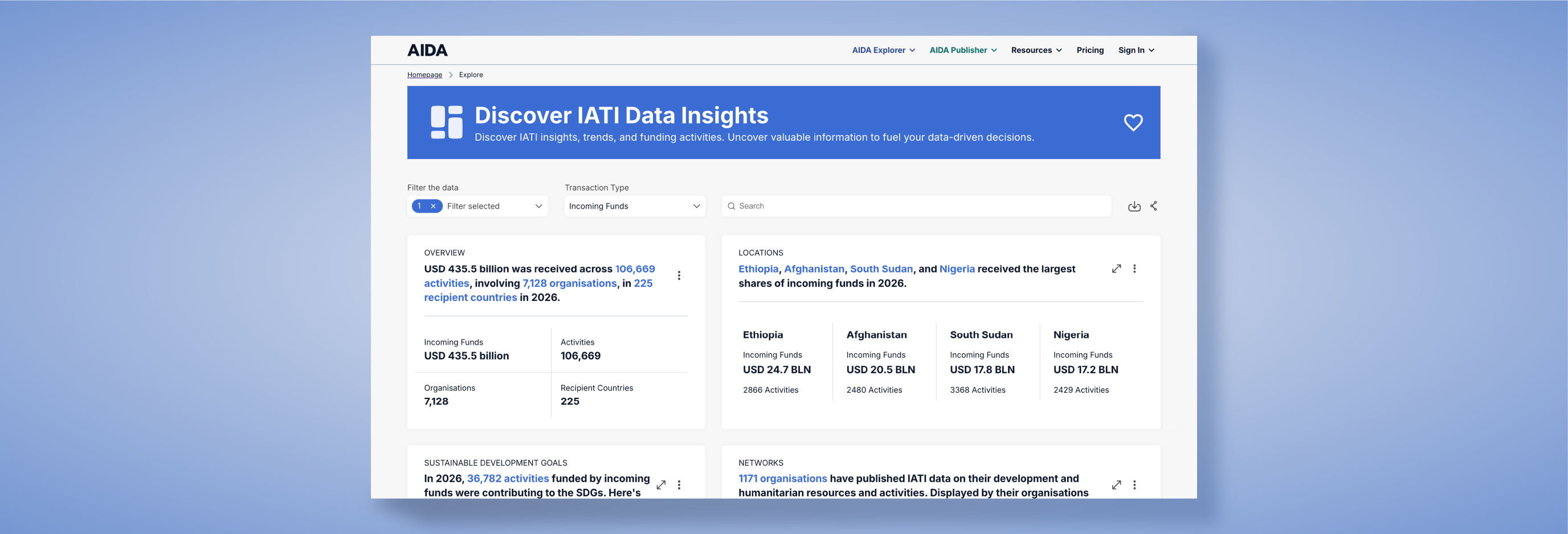
For data explorers, the workflow starts with selecting a time window and transaction context, applying filters to focus the dataset, reviewing headline metrics and visualisations, then drilling down to individual activities and results — with the ability to bookmark views for reporting or monitoring.
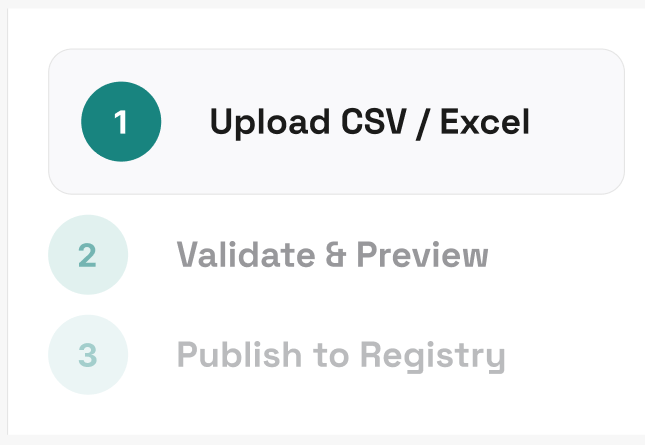
For data publishers, the journey follows a clear 3-step model: upload source data (CSV, XLSX, XML or ZIP — from local files, Google Drive or OneDrive), validate against IATI rules and preview visualisations of the data, then connect to the IATI Registry and publish. A persistent Data Hub workspace ties it all together, giving organisations ongoing visibility into their publication pipeline and team collaboration.
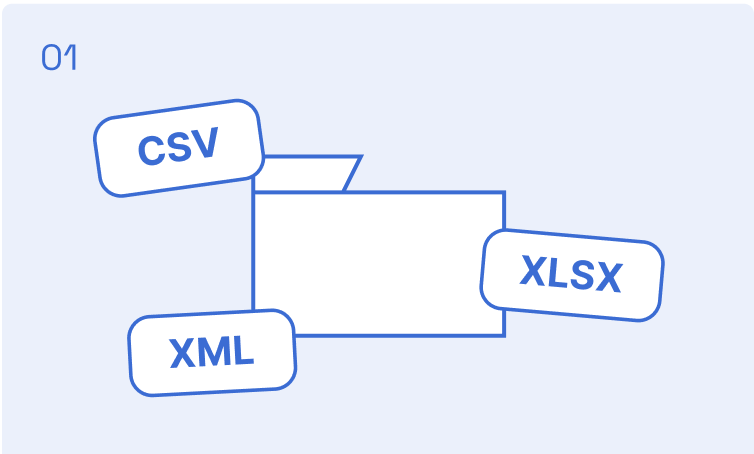
Connect & Upload
Import raw source data from local files, Google Drive, or OneDrive. No prior XML conversion or schema formatting required.
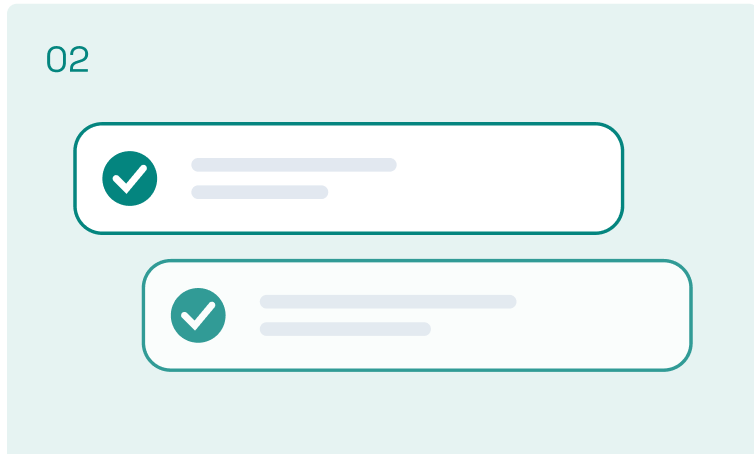
Automated Validation
Instant feedback against IATI rules. Pre-visualise how data will appear online to spot errors before release.

1-Click Registry Sync
Generate compliant XML and push directly to the global IATI Registry. Your Data Hub maintains publication records.
AIDA 3-step publishing flow.
Explore everything. Publish with confidence.

Explorer Side
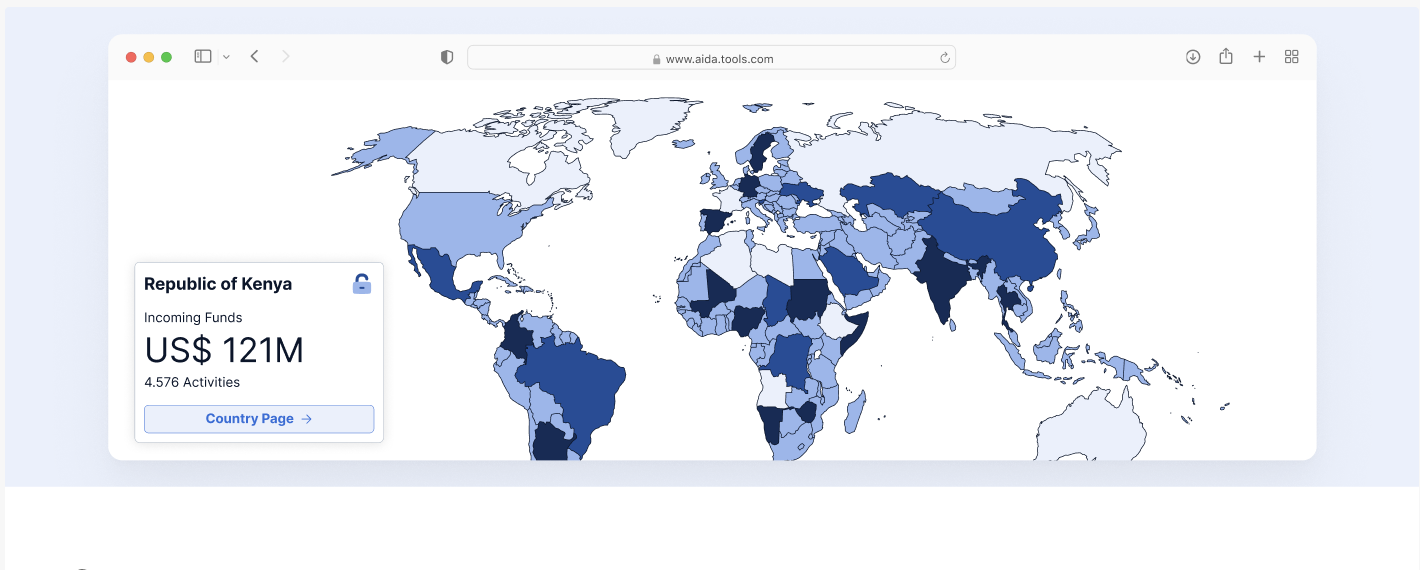
Global to granular
Navigate from a world map of commitments down to individual projects, with drill-downs by country, organisation, sector and SDG alignment.
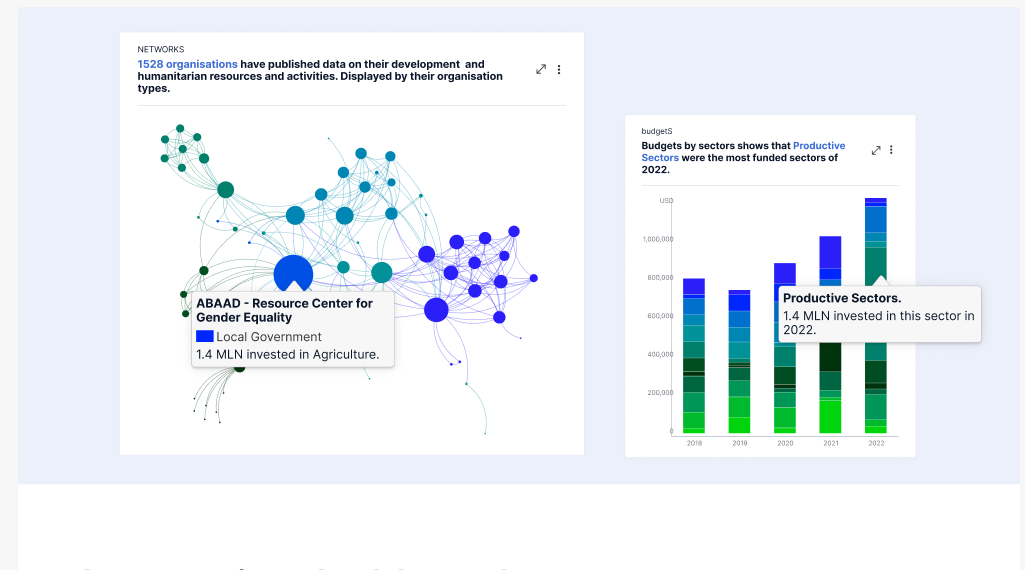
Interactive dashboards
Funding totals, trends, recipient geographies, sector breakdowns and activity-level views.

Bookmarks & favourites
Save filtered views for repeatable insight workflows, reporting and stakeholder communication.
Results & impact
Surface targets vs. actuals where available, making it possible to track what’s been achieved — not just what’s been spent.

Publisher Side
3-step publishing
A guided flow that takes organisations from raw spreadsheets to IATI Registry submission.

Built-in validation
Connected to the IATI validator, with clear error feedback and pre-visualisations to fix issues before release.

Your Data Hub
A persistent workspace for managing files, tracking publishing status (Drafted → Published), and collaborating with team members.
Cloud-connected
Import files directly from Google Drive or OneDrive, with support for CSV, XLSX, XML and ZIP formats.
Bridging the Gap Between Data and Impact
The global transparency ecosystem produces massive amounts of humanitarian and development data, but a harsh disconnect remains: the organisations required to publish the data struggle with complex XML compliance, while the audiences who need the data struggle to extract insights from raw databases. AIDA closes this gap through a clean, two-sided cycle:
AIDA Publisher (The Input Stream)
Instead of wrestling with XML schemas, Data Publishers (NGOs, governments, and multilaterals) simply upload their standard Excel or CSV files. Publisher automatically validates, converts, and syncs their data directly into the global IATI Registry—removing the friction from transparency compliance.
The Global Infrastructure (The Core)
At the centre sits the IATI Registry and the IATI.cloud API, acting as the universal source of truth for global aid flows.
AIDA Explorer (The Output Stream)
Explorer fetches this complex, global dataset and translates it into intuitive, interactive dashboards. It allows Data Consumers (programme managers, journalists, donors, and the public) to discover insights through maps, charts, and target-vs-actual evaluations without needing to query a database.
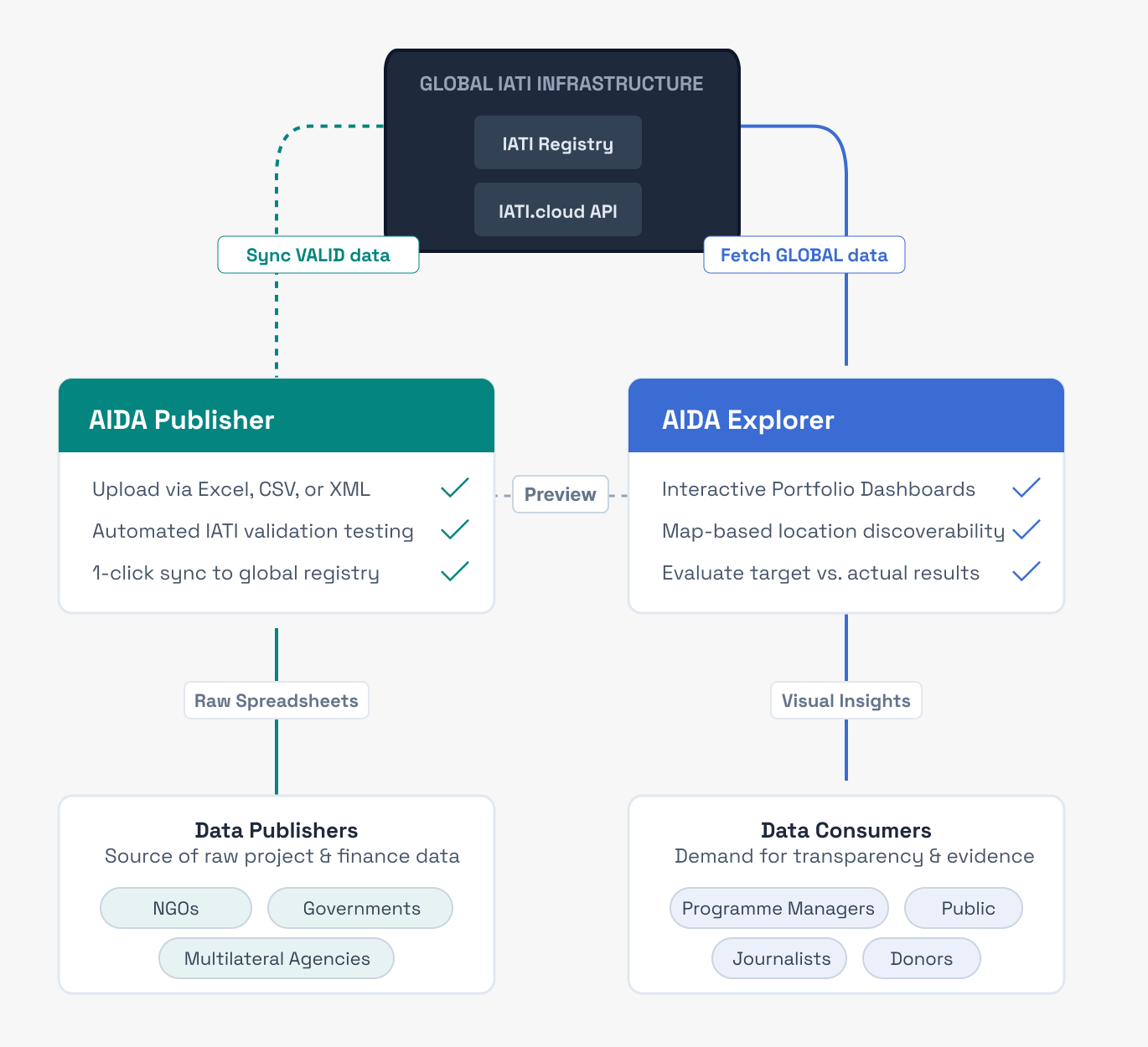
AIDA value chain and ecosystem map.

Have a data platform or transparency initiative in mind?
We partner with public-good organisations to build the data infrastructure their mission depends on.